
If you already know you have a drainage problem, the next question is the harder one: what do you actually do about it? For most Northeast Ohio homeowners weighing a French drain vs. rain garden vs. dry creek bed, the answer depends on one thing: what your water is actually doing. Those three systems handle most yard drainage problems in our region. All three work, but the right one depends on where your water comes from, how much of it pools, and what you want your yard to look like when the skies clear.
This guide walks through how each system works, where it performs best, and how to match the fix to your specific drainage problem.
Key Takeaways
- French drains redirect water underground and are the most effective solution for subsurface saturation in Northeast Ohio’s heavy clay soil.
- Rain gardens hold runoff temporarily and let it drain through amended soil, but they require proper soil preparation to work in Northeast Ohio’s clay-dominant ground.
- Dry creek beds guide surface water along a designed path and double as a year-round landscape feature.
- Northeast Ohio’s freeze-thaw cycles affect all three systems and must be factored into design and installation.
- Many properties in the Cleveland area benefit from combining two systems: a dry creek bed for surface flow paired with a French drain for subsurface saturation.
- Choosing the wrong system for your drainage type wastes money. Matching the fix to the problem is the most important decision.
Three Systems, One Goal
All three drainage systems exist to move excess water away from where it’s causing damage. The difference is in how and where they do it.
The key factors that determine the right choice come down to three questions:
- Is the water coming from the surface (runoff from rain or downspouts) or from below (soil so saturated it can’t hold any more)?
- How much volume are you dealing with?
- What role do you want the drainage system to play in the overall look of your landscape?
Your answers to those three questions point almost directly to the right system. Here’s how each one works.
French Drains in Northeast Ohio
A French drain is a buried trench filled with gravel and a perforated pipe. Water enters the gravel layer, flows into the pipe, and gets carried away from your property to a lower exit point: a storm drain, a dry well, or the street. Once installed, it’s completely invisible.
This is the right system when water is saturating the soil beneath your yard, not just running across the surface. In Northeast Ohio, that situation is common. Our soil is heavy with glacial clay deposited thousands of years ago by retreating ice sheets. According to OSU Extension’s research on physical soil health in Ohio, clay soils have low natural drainage capacity because water moves slowly through tightly packed clay particles. When the soil is saturated, water has nowhere to go. It sits.
A French drain creates a bypass route beneath the clay layer. Water finds the gravel, follows the pipe, and exits the yard instead of pooling at the surface.
French drains are best for:
- Water that pools against your foundation
- Yards where low spots stay soggy for two days or more after rain stops
- Subsurface saturation: when the ground feels soft and wet even without recent rain
- Areas where water is threatening a basement or crawl space
The honest tradeoff: French drains are the most involved installation of the three options. Proper grading and pipe depth require professional expertise. In Northeast Ohio specifically, pipes installed too shallow will heave during freeze-thaw cycles, reducing the system’s effectiveness over time. This is not a DIY project for most homeowners. And once it’s in, it’s invisible. If aesthetics matter to you, a French drain is your best option.
Rain Gardens
A rain garden is a shallow planted depression designed to capture surface runoff and let it drain down slowly through amended soil. It holds water temporarily, usually for 12 to 48 hours after a heavy rain, and then releases it downward through the improved soil beneath, rather than letting it run off across the yard.
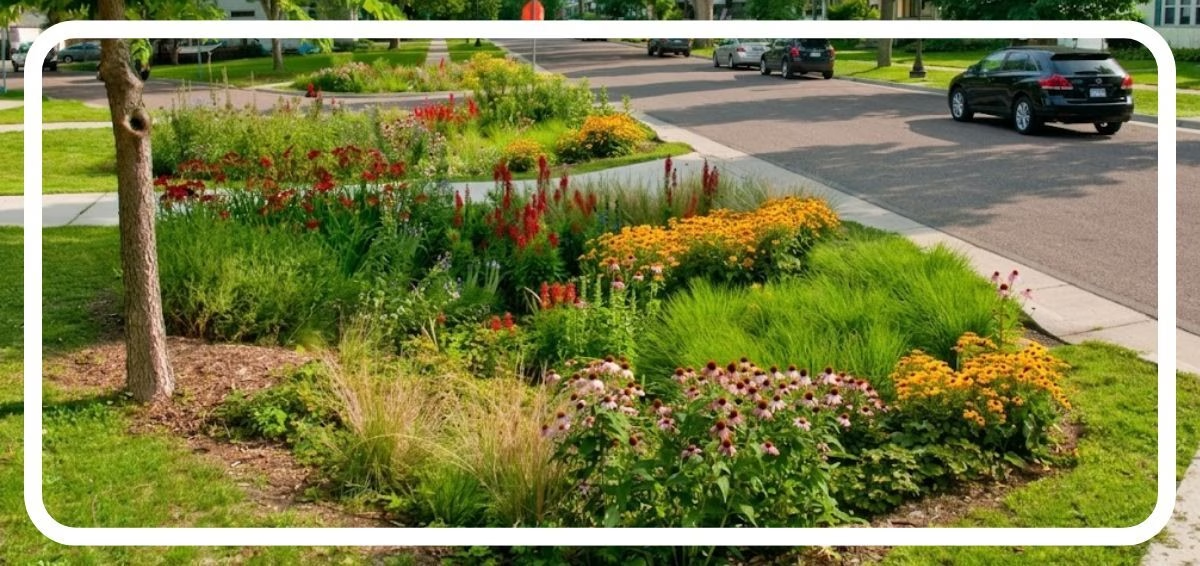
Of the three systems, the rain garden is the only one that adds genuine beauty to the landscape. It becomes a planted garden bed, designed to look intentional in every season. When the right plants are chosen, they attract pollinators, support birds, and bring a naturalistic quality to the yard that the other two systems simply can’t match.
In Northeast Ohio, native rain garden plants like swamp milkweed (Asclepias incarnata), blue flag iris (Iris virginica), and switchgrass (Panicum virgatum) are well suited to the conditions. They tolerate standing water during and after rain events, and they handle the dry spells between storms without stress.
There is one critical caveat for Northeast Ohio homeowners: A rain garden installed in unimproved glacial clay soil will not drain through on its own. It will hold water, not release it. For a rain garden to work here, the soil beneath it must be replaced or heavily amended with a compost-rich mix that actually lets water soak through. The U.S. EPA confirms that clay and glacial till soils require soil amendment for rain gardens to function properly; without it, the practice fails. This is the most common reason rain gardens fail in our region.
Rain gardens are best for:
- Managing runoff from roof downspouts that dump onto lawn or garden beds
- Low areas of the yard that naturally collect surface water during rain
- Homeowners who want the drainage solution to add visual interest, habitat, and planting interest to the landscape
- Properties where the drainage issue is surface runoff, not deep soil saturation
The honest tradeoff: Rain gardens require more upfront design and soil work than the other options. Plant selection matters: the wrong choices will either drown out or dry out. Maintenance is ongoing, similar to that of any planted garden bed. Connect with the Garden Maintenance team to understand what long-term care looks like before committing to this system.
Dry Creek Beds: The Visible Path for Surface Water
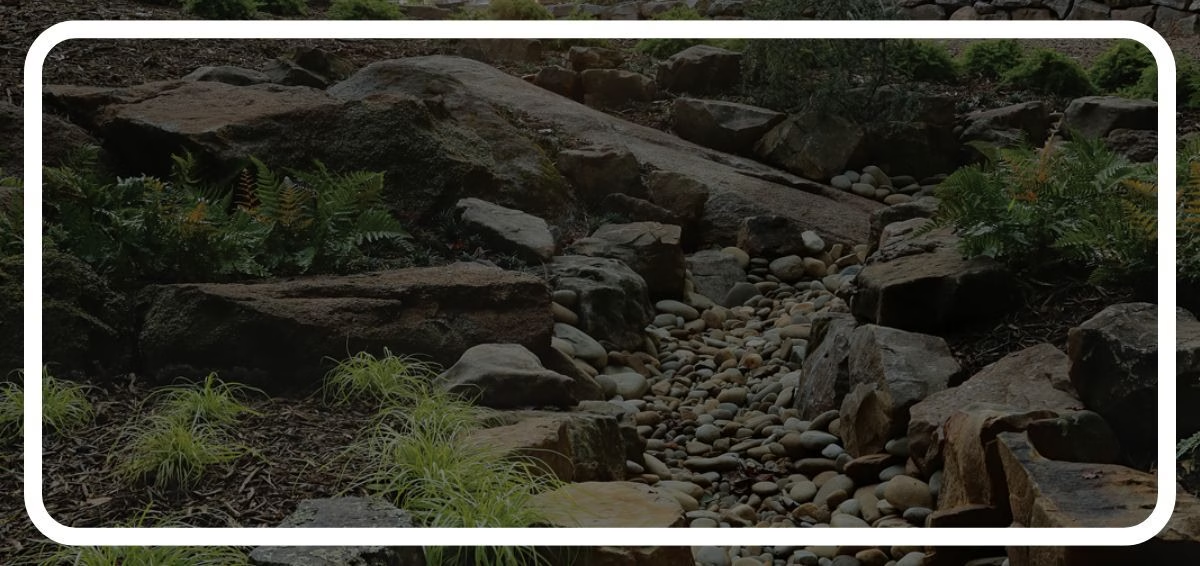
A dry creek bed is a surface channel lined with rock, gravel, and often boulders that guides water across the yard along a designed path. It mimics a natural streambed. During rain, water follows the creek bed to a safe exit point. Between rains, it sits dry and becomes a landscape feature.
This system handles surface runoff: water moving fast and laterally across your yard during a storm. It does not solve subsurface saturation. But for properties where water races across a slope, undercuts planting beds, or washes out mulch every time it rains hard, a dry creek bed is often the most practical and beautiful solution available.
When designed with care, a dry creek bed earns its place in the landscape year-round. Large boulders, varied rock sizes, native grasses along the edges, and low ground cover planted between stones create a naturalistic garden feature that most visitors assume has always been there.
One thing no competitor will tell you about dry creek beds in Northeast Ohio: Our freeze-thaw cycles shift rocks. A dry creek bed installed with small, lightweight stones and a shallow gravel base will migrate over the course of a few winters. Expect to reset rocks in spring. Minimizing this means building with a deeper gravel base, using larger anchor boulders at key points, and choosing rock sizes heavy enough to resist movement. A well-built installation requires professional grading and construction. Budget for annual spring maintenance if you choose this system.
Dry creek beds are best for:
- Sloped yards where runoff moves fast across the surface
- Downspout runoff that erodes planting beds or washes mulch away
- Properties where aesthetics matter, and you want the drainage system to become part of the landscape design
- Surface water problems where the soil itself dries out reasonably well between rains
The tradeoff: A dry creek bed handles surface water only. If your yard stays soggy for days after rain, or if the ground feels saturated even without active runoff, a dry creek bed alone will not solve the problem. In those cases, pairing it with a French drain addresses both layers of the issue.
Which Drainage System is Right For My Property?
This is where most homeowners get stuck. All three systems sound reasonable. Here is how to match the right one to what your yard is actually doing.
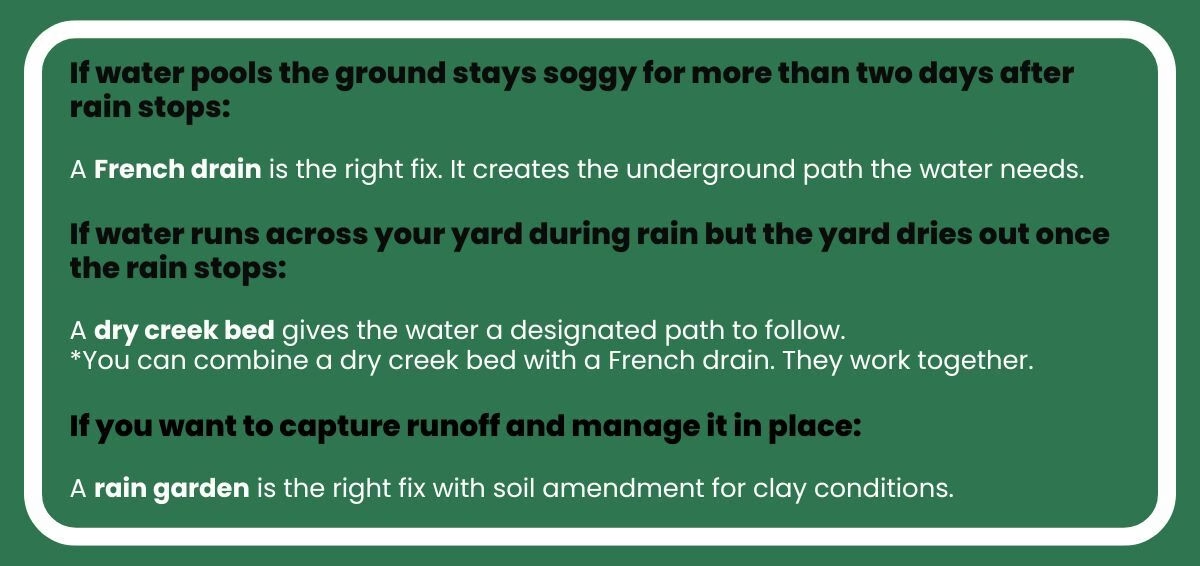
When the symptoms match more than one scenario, a professional assessment is the right first step.
When You Need More Than One System
Many Northeast Ohio properties have layered drainage problems. A larger lot may have a slope that sends surface water racing across the lawn (dry creek bed territory) while also having a low area near the foundation where the soil never fully drains (French drain territory). These are different problems that happen to share the same property.
Combining systems is common. It simply means the yard has more than one type of water behavior. A professional site walk-through maps where water comes from, where it moves, and where it ends up, which makes clear whether one system handles everything or whether two systems working together give you the best result. The landscape design and installation team at Lifestyle Landscaping has navigated these layered drainage challenges across hundreds of western suburbs properties. We know what combinations work.
Frequently Asked Questions
What is the difference between a French Drain and a dry creek bed?
A French drain is an underground system. It intercepts water in the soil and carries it away through a buried pipe. You cannot see it once it’s installed. A dry creek bed is a surface feature: a designed rock channel that guides water across the yard during rain. A French drain solves subsurface saturation. A dry creek bed solves surface runoff. Many properties benefit from using both.
Do rain gardens work in clay soil?
A rain garden can work in Northeast Ohio’s clay soil, but only with proper soil preparation. The existing clay must be removed from the rain garden depression and replaced with a compost-rich, well-draining mix. Without this step, the rain garden will hold water rather than releasing it downward, and the plants will drown. Soil amendment is not optional in glacial clay conditions. Done correctly, a rain garden becomes one of the most beautiful and functional drainage solutions available.
Can I combine a French Drain and a dry creek bed?
Yes, and in Northeast Ohio, this combination is often the right answer. A dry creek bed manages surface runoff: water moving fast across the yard during rain. A French drain manages subsurface saturation: water that has soaked into clay soil and has nowhere to go. The two systems address different layers of the same drainage problem and work well together on sloped or larger properties.
How much does a French Drain cost in Northeast Ohio?
French drain installation costs in the Cleveland area vary depending on the length of the system, the depth required, site conditions, and where the water needs to exit. Simple systems are less involved; larger installations covering long runs or complex grading are more so. The most reliable way to understand the scope and cost for your property is a professional site assessment. Contact the Lifestyle Landscaping design and installation team to schedule a walk-through.
Which drain system holds up best through Ohio winters?
All three systems perform well through Ohio winters when installed correctly for our climate. French drains need to be installed below the frost line to avoid pipe heaving. Dry creek beds need a deep gravel base and heavy anchor stones to resist rock migration during freeze-thaw cycles. Rain gardens need cold-hardy native plants that go dormant in winter and return in spring. The installation details matter more than the system type.
The Right Fix Depends on What Your Yard Is Actually Doing
A French drain, a rain garden, and a dry creek bed are not interchangeable. Each one solves a specific drainage problem, and in NE Ohio’s glacial clay soil, choosing the wrong system means spending money without solving the issue.
The Lifestyle Landscaping design and installation team has been solving drainage problems in the western suburbs of Cleveland for 50 years. We know these soils, these slopes, and these yards. If you’re ready to stop managing the problem and start fixing it, contact us to schedule a site walk-through.